EN · Language
EnglishDeutschFrançaisItalianoEspañol

Style & making susumu / shin

Turn one event notice into a layout you can use again

Separate the parts that stay from the details that change. Test a reusable layout with awkward real examples before calling it a template.

Wear this character

Start with a scene

You have made a clear notice for a small drawing evening, and another date is coming up. Duplicating the finished poster seems easy until the next title is twice as long and the venue changes. Before saving a template, list the information a reader needs: what is happening, when, where and how to take part. Decide which details must remain obvious even when the wording changes.

A closer look

Design for the next title as well as this one

Work from a copy of your own layout. Mark the replaceable text and images clearly, and keep the original finished notice separate. Use plain placeholders that describe their purpose, such as event title or location, rather than leaving old dates in place. Decide which parts should remain consistent: margins, the position of the date, or a small identifying mark. A template does not require every future notice to look identical.

Test it with a short title, a long title and an event with an extra practical detail. Read each version at the size people will actually encounter it. If the location disappears beneath decoration, adjust the layout rather than simply reducing the type. Include a brief note explaining which elements can move. When sharing the editable template, make sure its recipient also has the assets needed to open and use it.

See it in words

進む
susumuTo move forward
進める
susumeruTo move something forward
前進
zenshinForward movement
Examples of usage, not a diagram of the character’s historical development.

A meaning to make your own

A thought to give

For a friend organising recurring creative gatherings, a note with 進 might recognise the invitations and preparation that keep the events happening. Offer a template only if they want it; their way of organising may differ from yours.

Make a gift card

One more question

How do I know when the template is too restrictive?

If ordinary variations force you to fight the file, revisit its rules. Keep the information hierarchy and relax a decorative constraint. A useful template supports real examples rather than requiring every event to fit the first poster’s exact wording.

A character to carry with you 進

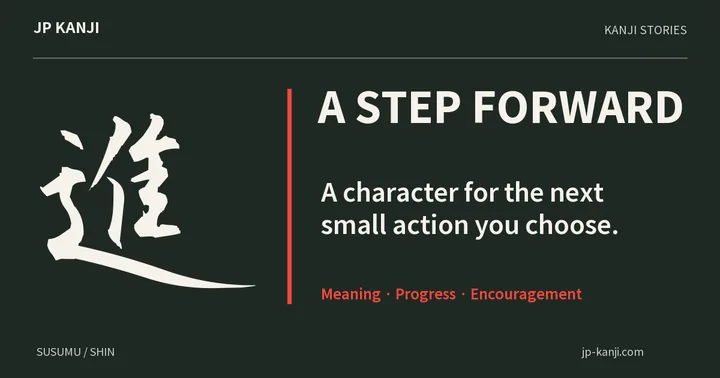
進 expresses the idea of moving ahead. Here the next step is a tool built from something you have already made. A 進 design can recall that useful kind of progress: making the next attempt easier without deciding every detail in advance.

Wear this character
進

進

Share this story

More about this character 進

All stories →

Meaning & background

進: the Japanese kanji for moving forward, one step at a time

Learn how 進 appears in words about advancing, then find a way to make the character an encouraging reminder rather than a demand.

Read the story

Style & making

Make a paper shape move in a short stop-motion loop

A fixed camera, a paper shape and a few small movements are enough to explore animation. Plan the return to the starting point as carefully as the movement itself.

Read the story

Everyday stories

Name creative file versions so you can find the one you meant

Separate working drafts, meaningful alternatives and exported copies. A small naming rule makes it easier to return to a design without guessing which file is final.

Read the story

Style & making

Plan an eight-page zine that feels complete when you turn the last page

Choose a small subject, make a numbered paper dummy and test the reading order. An eight-page booklet gives the idea a useful boundary.

Read the story
13 more stories

Everyday stories

Pack a small making kit someone can use without you beside them

Prepare a paper activity for another adult with clear contents, a visible first step and a way to keep unfinished work together.

Read the story

Everyday stories

Leave a restart note before putting a creative project aside

Help your future self return to an unfinished project with the current version, the open question and one clear next action.

Read the story

Everyday stories

Teach one small skill with a demonstration someone can follow

Show a clear result, slow down the difficult transition and give the learner a chance to try. A useful demonstration does not need to cover everything you know.

Read the story

Everyday stories

Make creative progress visible with a before-and-after record

Compare two versions of your work around one specific question. A small record can show what changed without turning a hobby into a scoreboard.

Read the story

Everyday stories

How to decide when a small project is done

Define a useful finish line before polishing forever. Progress can mean completing, handing over and making room.

Read the story

Sayings & idioms

Nisshin geppo: reading 日進月歩 without turning it into a deadline

The expression describes continuing progress. Learn its rhythm, then distinguish a description of change from a demand to improve every day.

Read the story

Style & making

Finishing a first version that someone can respond to

A usable draft needs a clear job. Decide what it should let another person see before polishing every corner.

Read the story

Everyday stories

Practising one small skill without turning everything into a score

A narrow question can make a practice session easier to understand. Compare examples, then decide what to work on next.

Read the story

Everyday stories

Starting a hobby again after a long gap

Begin with the activity as it fits your life now. A return does not need to recreate your former schedule.

Read the story

Everyday stories

Helping the next person continue where you stopped

A useful handover explains the current state, the next action and the unresolved questions. Progress can mean making continuation easier.

Read the story

Everyday stories

Learning with a friend without turning it into a race

Two people can work on different questions and still help each other. Make the purpose of feedback clear before comparing results.

Read the story

Words & readings

Susumu and susumeru: who is moving things forward?

Two verbs built from 進 place the focus differently. Learn the distinction with a meeting and a plan.

Read the story

Giving & choosing

A 進 gift for a next step that belongs to them

Mark a launch, a return or a small achievement with encouragement that does not become a demand for speed.

Read the story

Another character, another perspective

All stories →

Style & making

A visible clothing repair can become a detail you choose

Think about colour, placement and everyday use before making a repair stand out. A familiar garment can keep its usefulness and gain a personal detail.

Read the story

Style & making

The beautiful detail that makes something easier to use

A clear handle or a readable label can be pleasing because it helps. Look for a specific connection between appearance and use.

Read the story

Style & making

Waiting is sometimes part of making

A painted model or glued paper shape can need time between actions. Make the pause intentional rather than filling it with more adjustments.

Read the story