EN · Language
EnglishDeutschFrançaisItalianoEspañol

Giving & choosing tabi / ryo

How to give a trip as a gift when the dates are not decided

Make the surprise an invitation to plan, with a clear offer and room to choose. Here is what to put in the card before any travel is booked.

Wear this character

The short answer

You can give the idea of a trip before choosing dates: write what you are offering, what is still open and how you will decide together. “I’d love to take you away for a weekend. I’ll cover the train and two nights, within this budget; let’s choose a place and dates that work for us.” The gift is the invitation and commitment described in the note, not a ticket that already exists.

A closer look

Give a real offer without pretending there is already a booking

Keep the surprise in the presentation rather than in obligations the recipient cannot change. Before reserving anything, talk about time off, journey length, who is going and the kind of day they would enjoy. A quiet stay and a packed sightseeing weekend are different gifts. If you name a destination, call it an idea until both of you have agreed to it. A real booking or voucher has its own conditions, which a decorative card cannot replace.

Be specific about costs without making the reveal feel like an invoice. Say whether you are paying for transport, accommodation, meals or an agreed contribution. Leave any spending outside that offer open for discussion. The recipient should not discover later that accepting the gift means paying for most of the trip. You can keep a modest budget and still make an appealing invitation.

Four things the card should make clear

You can put the practical details inside an envelope, beneath the main message.

DetailPossible wordingWhy it helps
Status“An invitation to plan a trip together; nothing booked yet.”Separates the gift idea from a reservation.
Offer“My gift covers our train fares and one night, up to the amount we agree.”Makes the scope clear before choices are made.
Choice“A seaside day, a city visit or another idea you prefer.”Leaves room for the recipient’s interests.
Next step“Let’s look at our calendars over coffee next week.”Gives the invitation a practical beginning.

Use your own budget and genuine options. Do not print a fake booking reference or describe an unconfirmed date as reserved.

See it in words

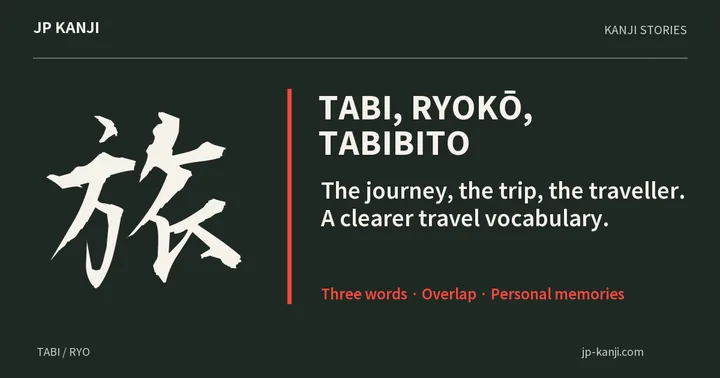
旅
tabiA journey
旅行
ryokōTravel; a trip
旅人
tabibitoA traveller
Examples of usage, not a diagram of the character’s historical development.

A meaning to make your own

A thought to give

If plans later change, return to the offer together. A shorter journey, another season or a different shared outing may suit you better. Agree on that change rather than silently replacing what was promised. The personal part of this gift is the time you choose to share.

Make a gift card

One more question

Can I keep the destination secret but let the person choose the dates?

Yes, if they enjoy that kind of surprise. Agree on the budget, travel time, required preparations and dates first, and check that they are comfortable not knowing the destination. If they would rather choose it too, make that part of the gift.

A character to carry with you 旅

旅 means journey or travel. It can be a small reminder of the shared plan while the dates are still open. If the recipient likes the design, a 旅 garment can accompany the card, with their preferred colour and fit. It is a gift in its own right; it does not need to serve as proof that the trip has been booked.

Wear this character

旅

旅

Share this story

More about this character 旅

All stories →

Everyday stories

Travelling with a friend when your ideal days are different

Agree on pace, spending and time apart before a trip, so shared memories do not require an identical itinerary.

Read the story

Everyday stories

Pack for the day you will actually have

Walk through one outing from departure to return, then test your bag. Specific scenes can be more useful than an ever-growing generic packing list.

Read the story

Everyday stories

Read a departure board one detail at a time

Match your booking to the service information in front of you, then resolve the uncertain detail. A familiar-looking destination alone may not identify your departure.

Read the story

Everyday stories

Plan a day trip by train around the return journey

Choose a reachable destination, a manageable activity and a return plan checked with the actual operator.

Read the story
19 more stories

Everyday stories

Plan a rainy city day without crossing town between every indoor stop

Build a compact alternative around one area and check the practical details before leaving.

Read the story

Meaning & background

旅: tabi, travel and the stories you bring home

旅 is the kanji for a journey. Explore how a place can become a memory, and how to turn a travel-inspired design into a personal gift.

Read the story

Giving & choosing

Plan souvenir spending before the last shop at the station

Choose who you are buying for, what is worth carrying and how much space you want to give to gifts.

Read the story

Style & making

Make a travel photo book people will want to turn through

Choose a small story, remove repeated views and give each page a clear role.

Read the story

Style & making

Send a postcard from home as if someone were visiting your ordinary day

Choose one local detail and write a small scene instead of waiting for a holiday worth announcing.

Read the story

Everyday stories

Choose a journey seat by what matters to you

A window view, easier access or sitting together may lead to different choices. Rank your preference before reading the actual train or coach seat options.

Read the story

Everyday stories

Make a small phrase card for the conversations your trip may need

Choose a few practical questions, check their intended meaning with a fluent reader and prepare a way to ask for a written answer. Keep the card easy to find.

Read the story

Everyday stories

Share a trip without making your friends watch every photograph

Choose three scenes, keep the first telling short and invite another person’s story. A travel evening can become a conversation instead of a slideshow marathon.

Read the story

Style & making

Choose souvenir clothing you will still wear after the trip

Look beyond the holiday moment when choosing a souvenir T-shirt or layer. Connect the memory to a garment that fits life at home.

Read the story

Everyday stories

Sketch a place with a few lines instead of chasing a perfect view

Choose one shape, one overlap and one detail for a travel sketch. Leave enough context to remember where you stopped and what caught your attention.

Read the story

Everyday stories

Make a travel playlist that remembers the journey in order

Turn a few songs into a personal route through a trip. Keep the connection specific with a place, a moment and one line of your own.

Read the story

Sayings & idioms

Remembering the journey, and the people who made it easier

An improvised lunch can stay with you longer than a missed train. A story of companionship leads to 旅は道連れ世は情け.

Read the story

Everyday stories

The small souvenir that remembers a whole afternoon

A ticket, postcard or sketch can carry a precise moment. Keep the memory attached before the object becomes anonymous.

Read the story

Everyday stories

Spending time on one street instead of collecting more stops

Choose a small area and a few questions. A modest outing can give you something specific to remember without a crowded itinerary.

Read the story

Style & making

A travel journal you can write in five lines

Record one place, one detail, one exchange, one surprise and one question. Keep it small enough to finish while the day is still clear.

Read the story

Everyday stories

The return journey: noticing home after being away

A familiar room can look slightly different when you return. Record the difference before ordinary routines cover it again.

Read the story

Everyday stories

Giving a travel memory to someone who was not there

A souvenir becomes easier to receive when its story connects with the recipient, not only with the traveller.

Read the story

Words & readings

Tabi, ryokō and tabibito: three Japanese travel words

A journey, travelling and a traveller: learn the differences without turning them into a rigid “tourist versus explorer” rule.

Read the story

Giving & choosing

A 旅 gift for a travel companion: turn one memory into a note

Choose a detail from a shared journey instead of a generic list of destinations or a promise of the next trip.

Read the story

Another character, another perspective

All stories →

Everyday stories

When a shared plan changes: making the new version clear

A changed time or cancelled contribution can leave people imagining different plans. Write the next agreement in plain language.

Read the story

Everyday stories

When the picnic becomes an indoor afternoon

A changed plan can preserve the part people were looking forward to. Identify that part before replacing the whole day.

Read the story

Everyday stories

How to choose a meeting place that works for everyone

A useful meeting point needs more than a map pin. Share the entrance, the waiting spot and a simple plan for finding each other.

Read the story