Everyday stories wa / nagomu
Label a shared fridge so ownership and shared food are easy to understand
Use a few agreed labels instead of filling the fridge with ambiguous notes.
Wear this characterThe short answer
In a shared fridge, a name tells people who owns something but not whether they may use it. Agree on a small set of labels such as a person’s name, “shared” and “please ask”. Keep the wording consistent so a guest does not have to interpret a private code.
A closer look
Separate ownership from permission to use
Place labels where they can be read without unpacking everything. Include a date only when you know what that date represents, such as when a container was prepared. Do not turn a handwritten date into a guarantee that food is safe; follow relevant storage instructions.
Give shared items a defined shelf or basket if space allows. Keep original ingredient and storage information accessible. Ask before moving someone’s food into a different container, particularly when the original packaging contains information they need.
See it in words
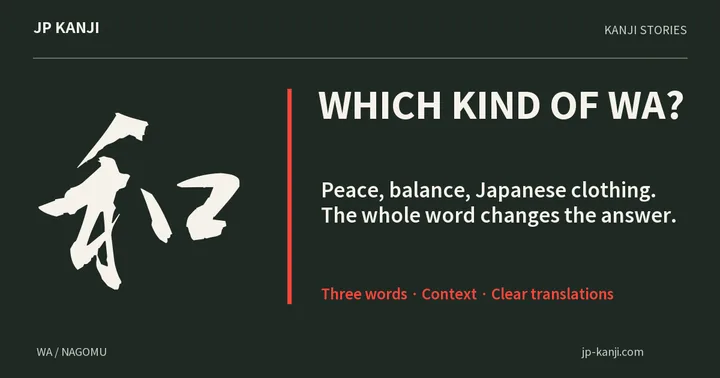
- 平和
- heiwaPeace
- 調和
- chōwaHarmony or balance
- 和食
- washokuJapanese food culture
A meaning to make your own
A thought to give
For someone moving into a shared home, a useful gift follows their needs. A garment with 和 should be chosen for their taste, while household labels remain a practical shared decision.
Make a gift cardOne more question
Is colour coding enough?
Use words as well. Colours may be hard to distinguish or their meaning may be forgotten. A short written label remains clearer when a new person joins the household.
A character to carry with you 和
和 can describe the everyday effort of sharing space clearly. Harmony here is an arrangement people can understand, not a demand that everyone uses the same food or schedule. The character can also be a personal clothing motif.
Wear this character