EN · Language
EnglishDeutschFrançaisItalianoEspañol

Style & making bi / utsukushii

Reuse wrapping paper with folds that look intentional

Work with existing creases and clean sections before adding ribbon or another layer.

Wear this character

The short answer

To reuse wrapping paper, first spread it out and look for clean sections, tears and old tape. Compare those areas with the size of the gift. A smaller intact section can make a better wrapper than a large sheet with damage across its centre.

A closer look

Inspect the sheet before choosing the fold

Test the arrangement around an empty box or the protected gift before cutting. Place an existing crease along an edge where it helps the shape. If a small tear remains, turn that section inward or use a separate paper band that has a clear purpose.

Keep additions simple. A plain strip can carry the recipient’s name while bringing two patterns together. Avoid adding several decorative layers just to hide every trace of previous use; the result still needs to open without damaging the contents.

See it in words

美
biBeauty; read bi in many words
美しい
utsukushiiBeautiful
み
miHiragana mi, historically linked to cursive 美
Examples of usage, not a diagram of the character’s historical development.

A meaning to make your own

A thought to give

If wrapping clothing, protect it from ink transfer, loose decoration and dirty paper. Confirm the recipient’s size and fit before spending time on the wrapping; a beautiful parcel cannot resolve an unsuitable garment.

Make a gift card

One more question

Should I hide every old fold?

No. A straight existing crease can become part of the structure. Focus on cleanliness, strength and an arrangement that suits the gift rather than disguising the paper’s entire history.

A character to carry with you 美

美 means beauty. Here it can connect with noticing a good arrangement in material that already exists. That interpretation does not require the paper to appear new. A carefully chosen garment can carry the same character as a separate personal gift.

Wear this character

美

美

Share this story

More about this character 美
All stories →

Style & making

A visible clothing repair can become a detail you choose

Think about colour, placement and everyday use before making a repair stand out. A familiar garment can keep its usefulness and gain a personal detail.

Read the story

Style & making

The beautiful detail that makes something easier to use

A clear handle or a readable label can be pleasing because it helps. Look for a specific connection between appearance and use.

Read the story

Everyday stories

Design a small label that makes a handmade notebook feel complete

Choose the first thing a reader needs to see, then give supporting details a quieter place. Test a real-size label before attaching it.

Read the story

Style & making

Make a table centrepiece without flowers or extra clutter

Use a few low objects while leaving room for plates, conversation and serving dishes.

Read the story
25 more stories

Style & making

Caring for printed clothing: read the garment before choosing the wash

Use the actual care label and product guidance, especially when several fabrics and prints share one laundry load.

Read the story

Style & making

Make handwritten place cards guests can read from their seats

Test the name, contrast and folded shape before decorating a whole set.

Read the story

Style & making

Build a pattern from one small mark

A curve, dash or uneven dot can become a personal pattern. Compare spacing and direction before adding more shapes or colours.

Read the story

Style & making

Bring an art print home without treating every paper like a poster

Ask about the medium and packaging before deciding whether a print can be rolled.

Read the story

Giving & choosing

How to wrap a soft gift without a box: a neat parcel or a simple bag

Wrap a scarf, T-shirt or other soft present by giving it a stable shape first. Choose a flat parcel or a bag, then add a clear, personal finishing detail.

Read the story

Meaning & background

美: Japanese kanji for beauty, from a character to a way of looking

Discover 美, its relationship with the word utsukushii and the hiragana み, and a personal approach to choosing a design for beauty.

Read the story

Style & making

Plan a small gallery wall with paper before making holes

Test the arrangement at real size, including gaps and nearby furniture, before choosing fixings.

Read the story

Everyday stories

Organise a dresser tray around the things you use every day

Give small everyday objects a visible place without moving the whole drawer onto the surface.

Read the story

Style & making

Photograph a clothing flat lay that shows the garment clearly

Arrange the real shape, keep the whole item in view and avoid props that hide useful details.

Read the story

Style & making

Fold printed T-shirts so the right design is easy to find

Organise by what you need to recognise, while following each garment’s care instructions.

Read the story

Style & making

Choose a necklace that works with a graphic T-shirt’s neckline and print

Look at where the pendant actually falls rather than matching metal colour alone.

Read the story

Style & making

How to choose a kanji T-shirt size using a shirt you already own

Compare garment width and length with the right size chart, distinguish them from body measurements, and use product photos without guessing a size from the model.

Read the story

Everyday stories

One object, three kinds of window light

Keep the subject and frame still while daylight changes. A small photographic study can reveal what the light contributes to an ordinary object.

Read the story

Everyday stories

Draw a familiar object from touch before you look

Explore a safe everyday object with your hands, describe its edges and make a drawing from that description. Then compare the details you noticed.

Read the story

Style & making

Make a two-colour picture from paper silhouettes

Reduce a familiar scene to outlines and gaps. Move a few paper shapes until the picture remains readable without internal detail.

Read the story

Style & making

Make a one-colour outfit interesting by looking at texture

Compare surfaces, shapes and a single graphic when an outfit uses similar colours. Start with the clothes already in your wardrobe.

Read the story

Everyday stories

Enjoy a small collection without needing the complete set

Give a collection a personal focus and a physical limit. Keep the details that matter, and leave room to pass on the next tempting object.

Read the story

Style & making

One photo, three crops: a small exercise in seeing

Use a photograph you already have to explore edges, empty space and what deserves attention—without taking another picture.

Read the story

Sayings & idioms

What makes a good ending?

After the final artwork or presentation, an impression remains. A thoughtful goodbye leads to 有終の美 and another way to think about beauty.

Read the story

Style & making

A still life made from three things already on your table

A cup, a folded cloth and a piece of fruit can become an exercise in attention. Change the arrangement before searching for better objects.

Read the story

Everyday stories

When a familiar object shows its history

A softened edge or a worn handle can make use visible. Describe the trace before deciding what story it tells.

Read the story

Everyday stories

Looking at the same artwork twice, with a different question

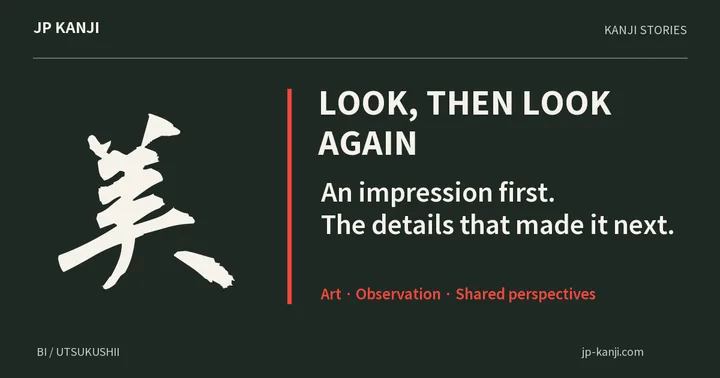
The first glance finds an impression; the second can find its cause. Try a short method for looking without needing a grand interpretation.

Read the story

Culture & objects

A tea bowl can be beautiful in more than one way

Rustic surfaces are only one part of tea ceramics. A museum account helps make room for contrast, selection and individual objects.

Read the story

Words & readings

Bi and utsukushii: using the Japanese character for beauty

See how 美 works in an adjective, the arts and a word for virtue, without treating the kanji alone as a complete sentence.

Read the story

Giving & choosing

A 美 gift that celebrates someone’s eye, not just their looks

For a maker, photographer or attentive friend, recognise the details they notice and the care they bring.

Read the story

Another character, another perspective

All stories →

Style & making

Waiting is sometimes part of making

A painted model or glued paper shape can need time between actions. Make the pause intentional rather than filling it with more adjustments.

Read the story

Culture & objects

Before the first kanji: noticing what a brush can do

A few marks can help you observe width, ink and direction before trying to imitate an entire character.

Read the story

Everyday stories

A final check before printing words that matter

Review wording, letterforms and placement separately before approving a small print project. Keep the approved version easy to identify.

Read the story