Style & making tabi / ryo
Make a travel photo book people will want to turn through
Choose a small story, remove repeated views and give each page a clear role.
Wear this characterThe short answer
A travel photo book becomes easier to make when you decide its purpose first. Is it a private record, a gift for a companion or a short introduction for friends? That audience affects how many pictures need explanation and which moments should remain private.
A closer look
Edit the journey before choosing the layout
Choose a small set of anchor images: an opening, a few scenes that show change and a final image. Add supporting details only when they contribute something different. Five nearly identical views rarely tell more than the strongest one with a useful caption.
Make a rough page plan before polishing individual spreads. Alternate wider scenes and details if that helps the story, and check crops across folds. Keep important faces and text away from areas the printing service identifies as vulnerable to trimming or binding.
See it in words
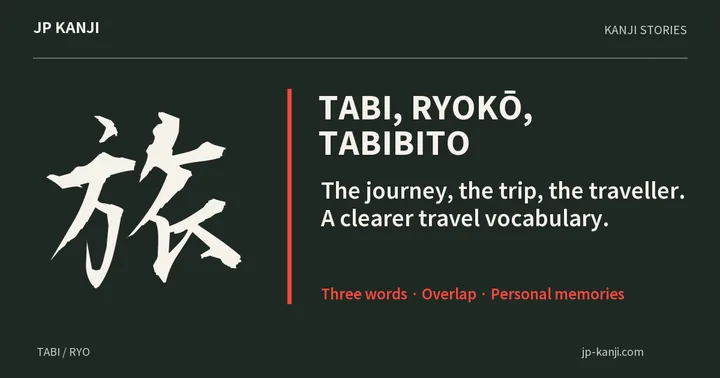
- 旅
- tabiA journey
- 旅行
- ryokōTravel; a trip
- 旅人
- tabibitoA traveller
A meaning to make your own
A thought to give
If giving a 旅 garment alongside the book, connect it to one shared moment in a note. Let the recipient choose the actual colour and fit, and keep the photo book enjoyable as a gift on its own.
Make a gift cardOne more question
Should the pages always follow the dates?
Chronology is one clear option, but places, colours or repeated themes can also work. Give the reader enough orientation to understand the choice. Avoid mixing sequences in a way that accidentally misrepresents when or where something happened.
A character to carry with you 旅
旅 means travel. A carefully edited book can hold the character of a journey rather than every file produced during it. Leaving some images out can make the memories you choose easier to revisit.
Wear this character