EN · Language
EnglishDeutschFrançaisItalianoEspañol

Everyday stories susumu / shin

What to put in your bag for a first day at a new workplace

Use the employer’s instructions first, then pack a small set of practical items for the actual day.

Wear this character

The short answer

For a first day at a new workplace, start with the instructions you have received. Confirm the arrival point, time, contact person and any documents or equipment specifically requested. Do not assume that advice for another company matches your role or setting.

A closer look

Confirm what is provided before carrying duplicates

Pack only the practical extras you expect to use: a way to take notes, any personal essentials and items needed for the journey. Check whether equipment, food facilities or storage are provided before bringing a laptop, a large lunch kit or several chargers.

Keep requested documents protected and easy to find. Share them through the employer’s stated process, not through an unfamiliar link sent by an unverified contact. If something is unclear, ask the known contact rather than guessing the requirement.

See it in words

進む
susumuTo move forward
進める
susumeruTo move something forward
前進
zenshinForward movement
Examples of usage, not a diagram of the character’s historical development.

A meaning to make your own

A thought to give

A 進 garment can be a personal gift for this transition, whether or not it is suitable to wear at work. Let the recipient choose the colour and fit and decide where it belongs in their wardrobe.

Make a gift card

One more question

Should I bring my own computer just in case?

Only if the employer asks or confirms that it is appropriate. Equipment and access policies differ. Clarify the requirement with your known contact rather than carrying or connecting a personal device on an assumption.

A character to carry with you 進

進 means advance or move forward. A new first day can be one step, not a demand to demonstrate complete confidence immediately. The useful preparation is what helps you arrive ready to listen and ask questions.

Wear this character
進

進

Share this story

More about this character 進

All stories →

Meaning & background

進: the Japanese kanji for moving forward, one step at a time

Learn how 進 appears in words about advancing, then find a way to make the character an encouraging reminder rather than a demand.

Read the story

Style & making

Plan a first craft-market display at the size of the actual table

Test visibility, prices and the handover space before carrying every product to the event.

Read the story

Style & making

Film a short hands-only demonstration that someone can follow

Show the starting state, keep the important action visible and test the result with a new viewer.

Read the story

Style & making

Build a small creative portfolio around the work you want to do next

Choose relevant examples, explain your contribution and make the first few pieces easy to understand.

Read the story
19 more stories

Style & making

Make a reusable setup checklist that survives the second event

Record actions in the order they happen and test whether another person can use the list.

Read the story

Giving & choosing

What to write in a leaving card for a colleague: thoughtful, short examples

Write a leaving-card message with one specific thank-you and a wish that fits what you know. Use these examples for a close colleague, a team card or an uncertain next step.

Read the story

Style & making

Make a paper shape move in a short stop-motion loop

A fixed camera, a paper shape and a few small movements are enough to explore animation. Plan the return to the starting point as carefully as the movement itself.

Read the story

Everyday stories

Name creative file versions so you can find the one you meant

Separate working drafts, meaningful alternatives and exported copies. A small naming rule makes it easier to return to a design without guessing which file is final.

Read the story

Style & making

Plan an eight-page zine that feels complete when you turn the last page

Choose a small subject, make a numbered paper dummy and test the reading order. An eight-page booklet gives the idea a useful boundary.

Read the story

Style & making

Turn one event notice into a layout you can use again

Separate the parts that stay from the details that change. Test a reusable layout with awkward real examples before calling it a template.

Read the story

Everyday stories

Pack a small making kit someone can use without you beside them

Prepare a paper activity for another adult with clear contents, a visible first step and a way to keep unfinished work together.

Read the story

Everyday stories

Leave a restart note before putting a creative project aside

Help your future self return to an unfinished project with the current version, the open question and one clear next action.

Read the story

Everyday stories

Teach one small skill with a demonstration someone can follow

Show a clear result, slow down the difficult transition and give the learner a chance to try. A useful demonstration does not need to cover everything you know.

Read the story

Everyday stories

Make creative progress visible with a before-and-after record

Compare two versions of your work around one specific question. A small record can show what changed without turning a hobby into a scoreboard.

Read the story

Everyday stories

How to decide when a small project is done

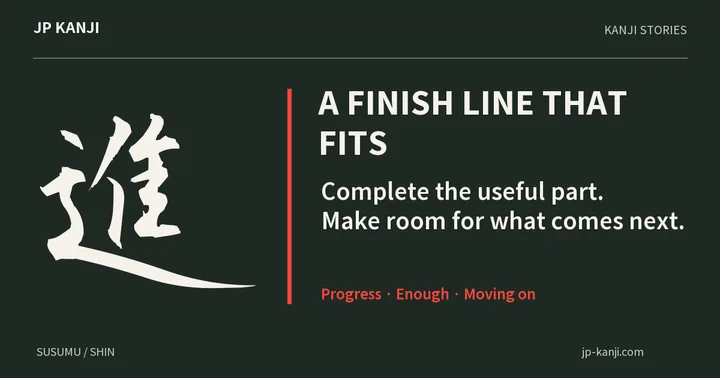
Define a useful finish line before polishing forever. Progress can mean completing, handing over and making room.

Read the story

Sayings & idioms

Nisshin geppo: reading 日進月歩 without turning it into a deadline

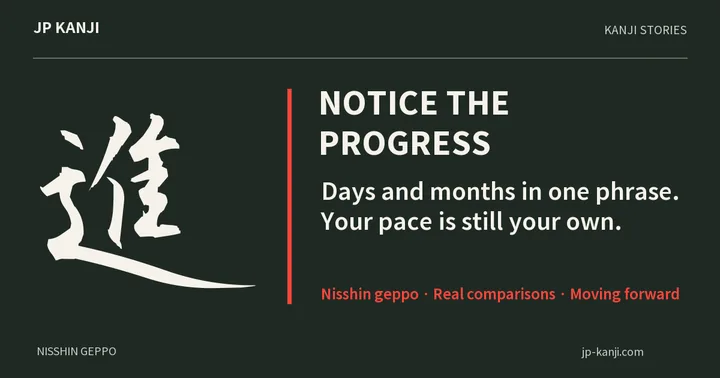
The expression describes continuing progress. Learn its rhythm, then distinguish a description of change from a demand to improve every day.

Read the story

Style & making

Finishing a first version that someone can respond to

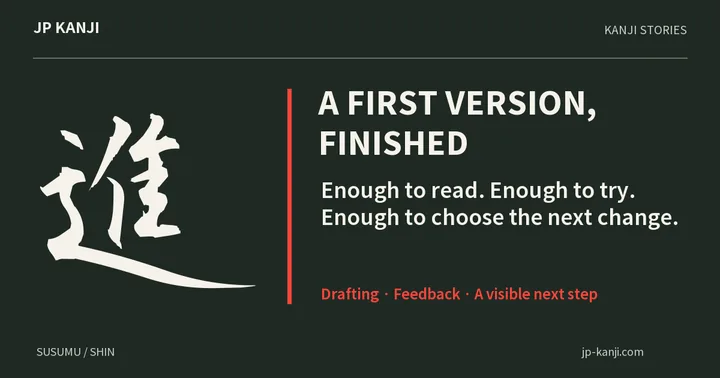
A usable draft needs a clear job. Decide what it should let another person see before polishing every corner.

Read the story

Everyday stories

Practising one small skill without turning everything into a score

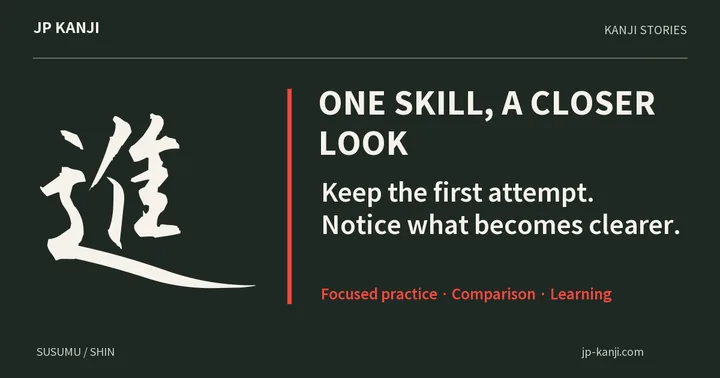
A narrow question can make a practice session easier to understand. Compare examples, then decide what to work on next.

Read the story

Everyday stories

Starting a hobby again after a long gap

Begin with the activity as it fits your life now. A return does not need to recreate your former schedule.

Read the story

Everyday stories

Helping the next person continue where you stopped

A useful handover explains the current state, the next action and the unresolved questions. Progress can mean making continuation easier.

Read the story

Everyday stories

Learning with a friend without turning it into a race

Two people can work on different questions and still help each other. Make the purpose of feedback clear before comparing results.

Read the story

Words & readings

Susumu and susumeru: who is moving things forward?

Two verbs built from 進 place the focus differently. Learn the distinction with a meeting and a plan.

Read the story

Giving & choosing

A 進 gift for a next step that belongs to them

Mark a launch, a return or a small achievement with encouragement that does not become a demand for speed.

Read the story

Another character, another perspective

All stories →

Sayings & idioms

The same trip, different expectations: what are we imagining?

Two friends look forward to the same weekend, but picture different days. An everyday conversation leads to the expression 同床異夢.

Read the story

Everyday stories

Travelling with a friend when your ideal days are different

Agree on pace, spending and time apart before a trip, so shared memories do not require an identical itinerary.

Read the story

Everyday stories

When a shared plan changes: making the new version clear

A changed time or cancelled contribution can leave people imagining different plans. Write the next agreement in plain language.

Read the story