Everyday stories wa / nagomu
Set up a shared photo album without losing track of permission
Agree who can add, view and reuse pictures before inviting the group.
Wear this characterStart with a scene
A shared photo album works better when everyone understands who can see it. Before collecting pictures from a reunion or trip, choose the intended audience and check the actual sharing settings. A link sent to friends is not a clear agreement that every image may appear publicly.
A closer look
Separate sharing with friends from public sharing
Write a short invitation covering three questions: who can add pictures, who can invite others, and what to do if someone wants an image removed. Ask before including identifiable people who were not part of the arrangement. Keep home addresses and travel documents out of casual uploads.
Give contributors a simple naming or caption pattern, such as place, approximate moment and a brief memory. Avoid demanding complete names or exact locations where they are unnecessary. Make one small sample album first so everyone can see how pictures and captions will appear.
See it in words
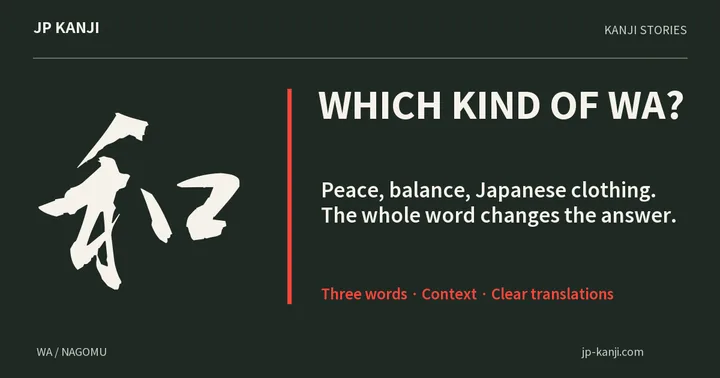
- 平和
- heiwaPeace
- 調和
- chōwaHarmony or balance
- 和食
- washokuJapanese food culture
A meaning to make your own
A thought to give
If turning a favourite image into a gift, obtain permission for that new use. A separate harmony garment can mark the occasion without printing somebody's photograph.
Make a gift cardOne more question
Does joining the album mean agreeing to everything?
No. State the uses you intend and ask again when the use changes. A clear, narrow agreement is more useful than assuming silence covers future publication.
A character to carry with you 和
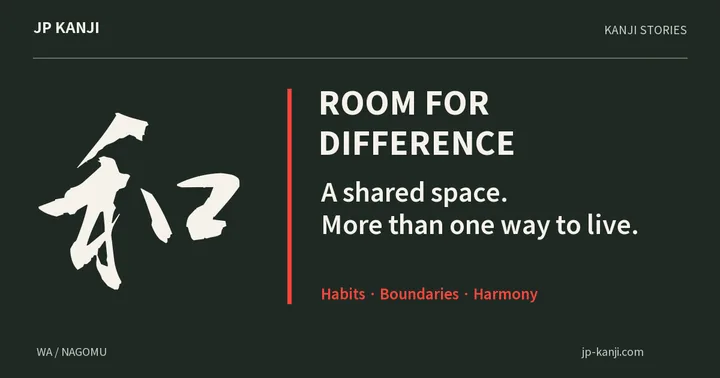
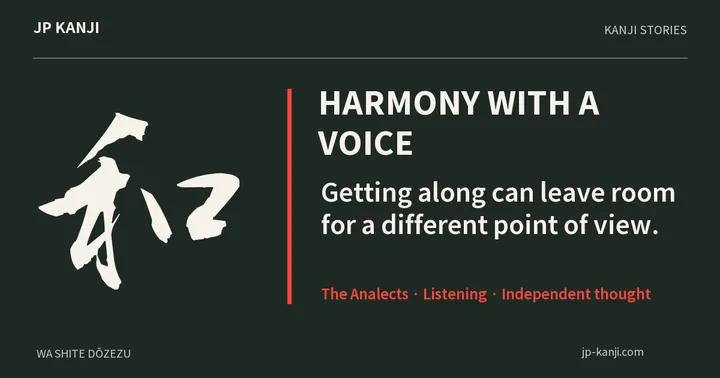
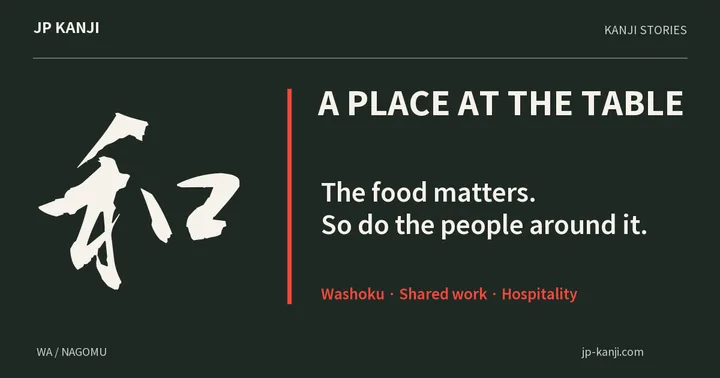
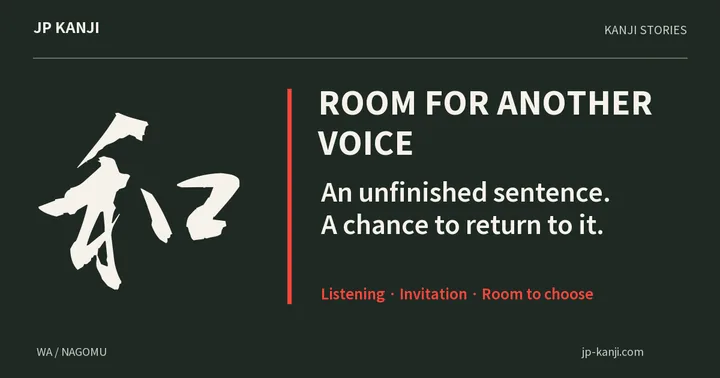
和 can express harmony. Here, the connection is a shared space with understandable boundaries, where different people can contribute without surrendering control over their own pictures.
Wear this character