Everyday stories wa / nagomu
Choose a recipe-swap format that other people can follow
Keep the original note, your changes and unanswered questions distinct.
Wear this characterStart with a scene
A recipe swap becomes more useful when everyone brings enough information to understand the dish. Agree on a simple format: title, ingredient amounts, equipment, sequence and approximate yield. Do not require a polished photograph; an ordinary readable page is a better starting point than an incomplete card.
A closer look
Exchange usable information, not just attractive names
Ask contributors to identify the source and separate their own adaptations from the original version. ‘I used a smaller tin’ explains more than silently changing a quantity. Keep unfamiliar measurements visible and clarify them before someone cooks, rather than guessing that every household uses the same cup or spoon.
Give each participant space for a question. Perhaps a family instruction says ‘until ready’ without describing what that looks like. Ask the person who knows the dish to explain the step in their own words. Do not present untested substitutions as reliable equivalents.
See it in words
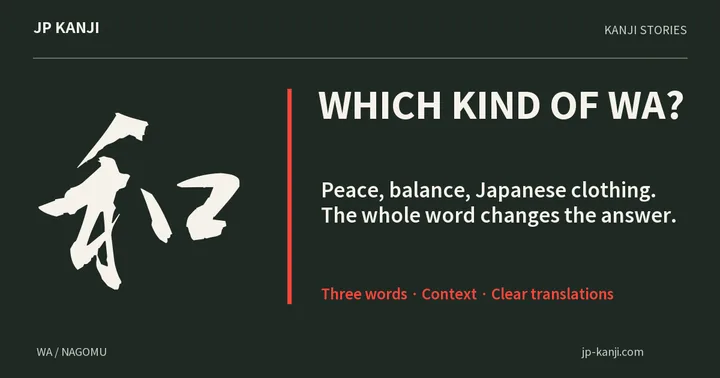
- 平和
- heiwaPeace
- 調和
- chōwaHarmony or balance
- 和食
- washokuJapanese food culture
A meaning to make your own
A thought to give
A harmony-themed host gift can accompany a note about a dish you enjoyed. Choose clothing according to the host's taste, not as an assumed kitchen uniform.
Make a gift cardOne more question
Should everyone cook the recipe before sharing it?
Say clearly whether it is a familiar household version or an idea still to try. That distinction lets the recipient judge what is known and what remains uncertain.
A character to carry with you 和
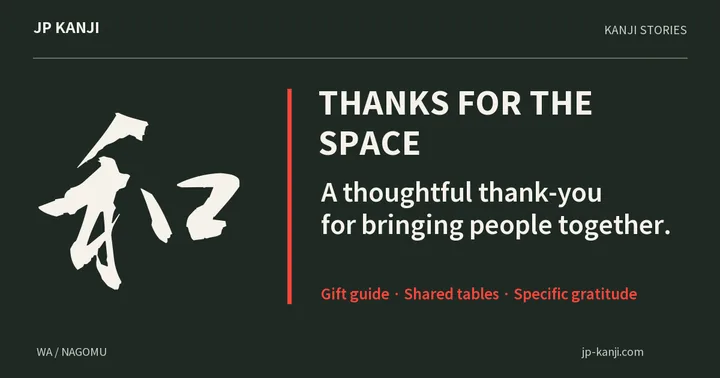
和 can stand for harmony. Here it connects with making different household practices understandable without pretending that every recipe must become the same version.
Wear this character