Style & making kaze / fū
How to tuck a graphic T-shirt while keeping the design readable
Test the printed area, waist comfort and ordinary movement before settling on a tuck.
Wear this characterThe short answer
Before tucking a graphic T-shirt, locate the lowest part of the design and compare it with your waistband. If the print disappears into the trousers, a full tuck changes what the garment says visually. There is no need to force that arrangement.
A closer look
Find the lower edge of the print first
Try the shirt untucked, then a small front tuck if the length allows. Keep the fabric relaxed rather than pulling the design tight. A partial tuck can create folds that interrupt lettering, so check the actual result instead of assuming it always reveals more.
Sit, reach and walk a little. Notice whether the shirt comes loose, bunches at the waist or needs constant adjustment. Your normal movement is a better test than standing still in front of a mirror for one flattering angle.
See it in words
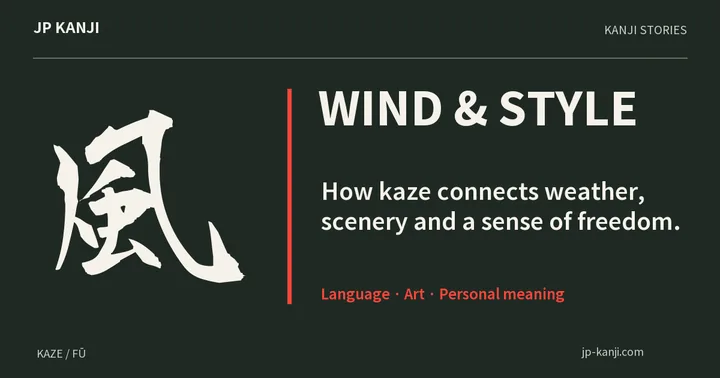
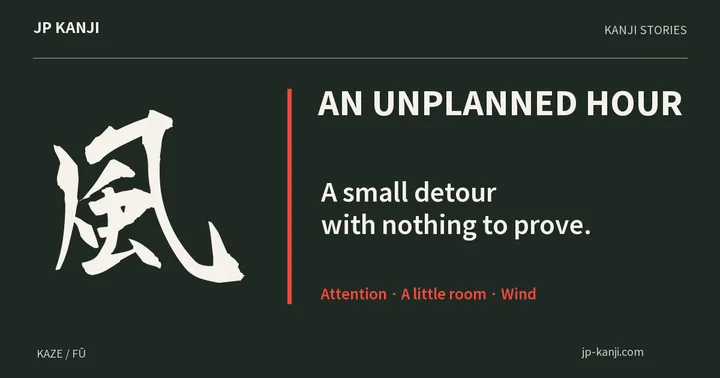
- 風
- kazeWind
- 風景
- fūkeiScenery
- 和風
- wafūJapanese style
A meaning to make your own
A thought to give
When selecting a new printed tee, inspect the product view and available fit information. For a gift, ask how the recipient normally wears their shirts rather than guessing from a styled picture.
Make a gift cardOne more question
Will a front tuck work with every print?
No. A design placed low on the shirt may fold or disappear. The exact print placement, garment length and waistband all matter; test the combination you actually own.
A character to carry with you 風
風, wind, can suggest flexibility in the way an outfit is arranged. Its strokes still need enough visible space to be read. Let the character guide the placement without claiming that every body or shirt length needs the same solution.
Wear this character