Style & making bi / utsukushii
Make a small catalogue of objects you want to remember
Record the details that matter without inventing an object's history.
Wear this characterStart with a scene
A personal object catalogue can begin with five things already in your home: a cup, a brooch, a notebook or a small handmade piece. Give each a simple identifier and photograph it clearly. The purpose is to preserve useful information, not to turn every possession into a museum exhibit.
A closer look
Separate what you know from what you guess
Record material if known, approximate dimensions, where the object is kept and how it came to you. Separate direct knowledge from an uncertain story. ‘Given to me by my aunt in 2018’ is stronger than assigning an unverified maker or period because the object looks old.
Add one photograph of a distinguishing detail and a note explaining why it matters to you. Avoid placing private addresses, purchase documents or other people's personal information in a version you plan to share. Keep sensitive records separately if you need them.
See it in words
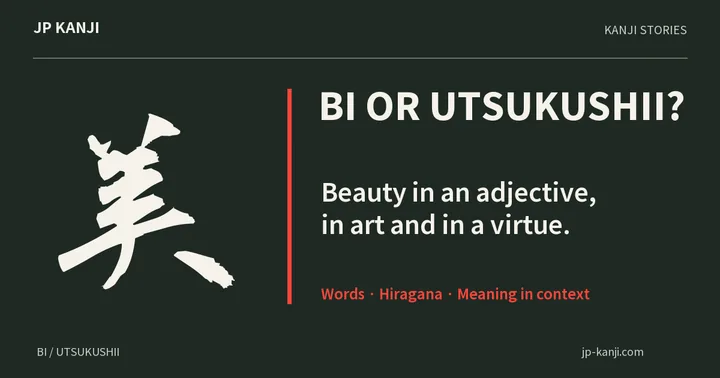
- 美
- biBeauty; read bi in many words
- 美しい
- utsukushiiBeautiful
- み
- miHiragana mi, historically linked to cursive 美
A meaning to make your own
A thought to give
A catalogue page can accompany an object passed to a friend. If a beauty garment joins the gift, let its meaning remain personal rather than presenting the catalogue as proof of monetary value.
Make a gift cardOne more question
Is this an insurance valuation?
No. A personal record preserves observations and memories. It does not establish authenticity, market value or the evidence requirements of an insurer.
A character to carry with you 美
美 means beauty. Looking closely at an ordinary object can reveal wear, proportion or a useful detail without needing to claim it is rare or valuable.
Wear this character