EN · Language
EnglishDeutschFrançaisItalianoEspañol

Style & making ryū / tatsu

Photograph a graphic T-shirt while someone is wearing it

Show the person and the print together without changing the garment to improve the picture.

Wear this character

The short answer

For a portrait featuring a graphic T-shirt, begin with an ordinary standing position and a clear view of the front. Check whether hair, a bag strap or an outer layer covers the design. Move the obstruction rather than stretching the shirt into an unnatural shape.

A closer look

Check the print before choosing the pose

Use a simple background and light that lets you see the cloth as well as the lettering. Take a straight-on picture before trying angled poses. A turned torso changes how the print looks, which may suit a portrait but gives less information about its actual layout.

Ask the wearer to move naturally between photographs, then inspect the results together. Keep the whole printed area in at least one frame. Check bright highlights and deep shadows before editing; recovering detail is different from inventing a darker fabric or a whiter print.

See it in words

龍
ryū / tatsuThe fuller form used in our design
竜
ryū / tatsuAnother Japanese form for dragon
龍神
ryūjinA dragon deity
Examples of usage, not a diagram of the character’s historical development.

A meaning to make your own

A thought to give

A photograph can accompany a gift note about a shared interest. Choose the garment separately using the actual product options; do not infer measurements from the person in a styled picture.

Make a gift card

One more question

Should I pull the fabric flat?

A gentle adjustment can remove an accidental fold, but preserve the natural fit. If the design remains unclear, add a product photograph rather than presenting a distorted wearing pose.

A character to carry with you 龍

The dense brushwork of 龍, meaning dragon, makes the full outline especially worth checking. Its presence comes from the real arrangement of strokes, not from adding an artificial glow around them.

Wear this character
龍

龍

Share this story

More about this character 龍
All stories →

Style & making

How to build an outfit around one bold graphic

Start with clothes you already wear. Compare layers, texture and contrast before adding more statement pieces.

Read the story

Style & making

Choosing a brush-lettered kanji shirt: look beyond the silhouette

Look at the character, its small spaces and its place on the garment before choosing a brush-lettered design. Three views can answer different questions.

Read the story

Style & making

What to wear to a convention when you are not cosplaying

Build a comfortable convention outfit around one interest, with room for queues, bags and the journey home.

Read the story

Style & making

How to wear an open shirt over a graphic T-shirt

Check the opening, sleeve comfort and hem lengths so the graphic remains part of the outfit.

Read the story
24 more stories

Meaning & background

Dragon kanji: 龍, 竜 and the presence of a single character

龍 means dragon. Discover its relationship with 竜, a dragon painted on a Kyoto temple ceiling, and a personal way to wear the character.

Read the story

Giving & choosing

Gifts for a fantasy reader who already owns the books

Choose a gift around how someone enjoys imaginary worlds, without guessing which volume is missing.

Read the story

Everyday stories

Style a reading shelf without making the books hard to reach

Give a small bookshelf a focal point while keeping favourite volumes easy to take out and return.

Read the story

Style & making

Choosing a frame for an art print: measure before choosing the colour

Separate the image size, paper size and frame opening before buying a frame for a favourite print.

Read the story

Everyday stories

Start a fantasy book club with a first meeting people can join

Choose a manageable reading boundary and questions that welcome different kinds of readers.

Read the story

Everyday stories

Going to a book signing: what to check before packing your favourite copy

Confirm the event format, permitted books and practical details before joining the queue.

Read the story

Style & making

Make a fantasy map legend that explains how your world works

Give a few symbols clear jobs before filling an imaginary map with decorative detail.

Read the story

Everyday stories

Host a book swap with clear rules for the books left at the end

Make ownership, condition and the final destination of unclaimed books clear before guests arrive.

Read the story

Style & making

Dragon kanji T-shirt or dragon illustration: which design suits you?

A dragon drawn as a creature and the character 龍 create different impressions. Compare what each puts on the shirt before choosing a dragon gift or an everyday graphic.

Read the story

Everyday stories

Make a paper dragon that comes alive as a shadow

Turn a simple cut-out, a lamp and a blank wall into a tiny performance. Let the outline do the work.

Read the story

Everyday stories

Make a tiny paper dragon look enormous in a photograph

Use camera position and everyday surroundings to explore apparent size. Keep the creature the same while changing its relationship to the scene.

Read the story

Everyday stories

Build a dragon from packaging that suggests its own shape

Let a fold become a neck and a torn edge become a mane. Make a small creature by responding to the materials already on your table.

Read the story

Everyday stories

Write an artwork label that gives a viewer somewhere to begin

Describe one visible decision, name the material and keep your personal interpretation distinct. A small label can invite looking without dictating it.

Read the story

Everyday stories

Design a personal emblem for a sketchbook or project box

Choose a small visual rule and make a mark that belongs to a particular activity. It need not summarise your whole identity.

Read the story

Everyday stories

Invent a dragon character with something more interesting than power

Give a fictional dragon a desire, a limitation and a habit. Use an ordinary encounter to discover what your character actually does.

Read the story

Everyday stories

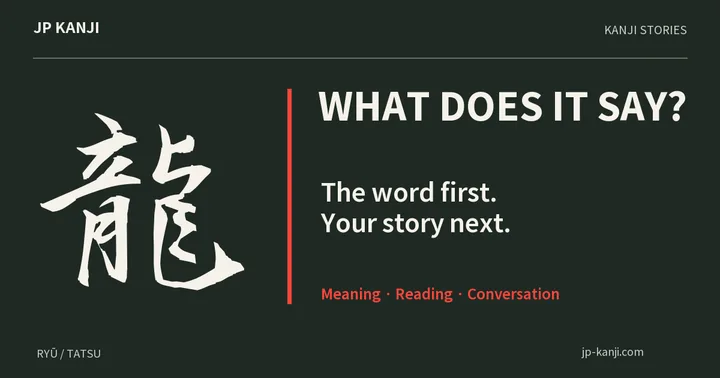
What does your kanji shirt say? A simple answer that feels like you

Explain a Japanese character in three steps: its meaning, its reading and the reason you chose it. A conversation can stay short and accurate.

Read the story

Everyday stories

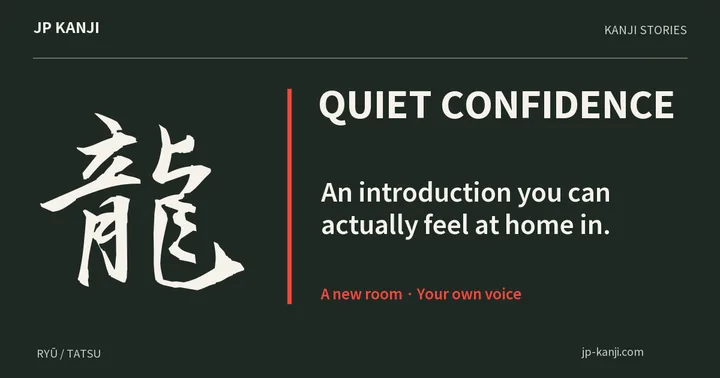
Quiet confidence: what to say when you enter a new room

A practical way to introduce yourself without performing a louder version of your personality—and a dragon to carry the thought.

Read the story

Sayings & idioms

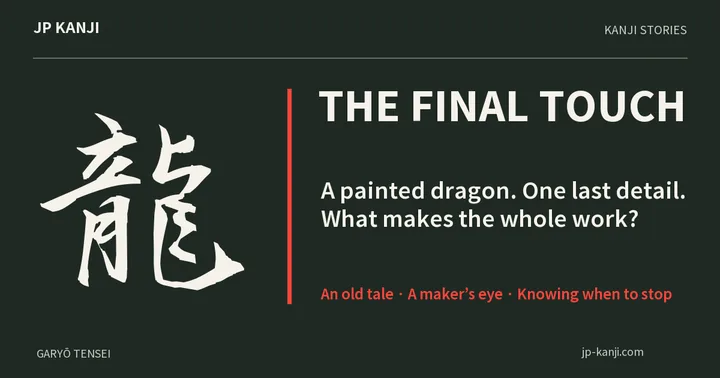
Garyō tensei: the dragon and the finishing touch

Why would a painted dragon need one final detail? Explore 画竜点睛 and the difference between finishing a piece and adding more to it.

Read the story

Culture & objects

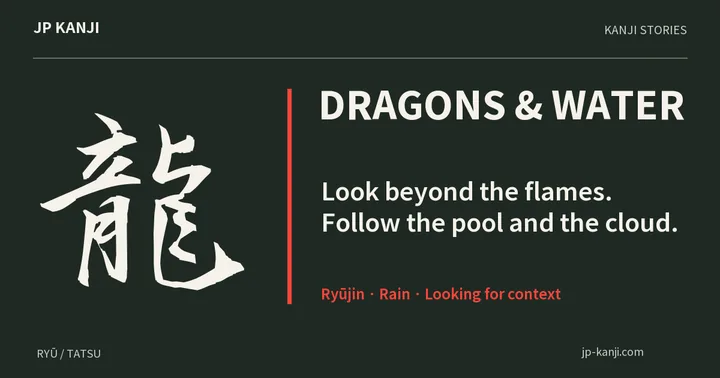
Why a Japanese dragon can bring rain, not fire

A dragon beside water opens a different story from the familiar fire-breathing monster. Start with the word ryūjin, then look again.

Read the story

Culture & objects

Tatsu, 辰 and 龍: choosing a dragon for a birth-year connection

A calendar and a dragon print may use different characters. Here is how to keep a personal birth-year gift clear.

Read the story

Style & making

Why bold lettering needs room around it

Try a simple framing exercise with a dense character: the blank area can change how clearly you see the whole design.

Read the story

Everyday stories

Showing your work for the first time, without a grand announcement

One print on a table and one useful question can make a first showing feel concrete. The dragon comes at the end of the story.

Read the story

Words & readings

Ryū or tatsu? How to read the Japanese dragon kanji

Learn the reading with the word: a dragon, a dinosaur and a tornado offer three useful starting points.

Read the story

Giving & choosing

A dragon kanji gift for someone who loves a bold design

Choose 龍 for the person’s taste, then turn a familiar fantasy motif into a personal message.

Read the story

Another character, another perspective

All stories →

Style & making

A small colour palette that still feels like you

Try two colours and one accent using clothes or objects you already own. Harmony can include a deliberate difference.

Read the story

Style & making

Finding your visual style by noticing what you repeat

Collect examples you genuinely return to, then describe their common details. A personal style can emerge from choices rather than a label.

Read the story

Style & making

Try a new clothing colour with the wardrobe you already have

Test one unfamiliar colour against clothes you actually wear. Keep the experiment small and use product images to compare the exact option.

Read the story