Everyday stories tabi / ryo
Share a suitcase without losing track of whose essentials are where
Agree on space, access and responsibility before putting two people’s belongings in one bag.
Wear this characterThe short answer
Sharing a suitcase begins with an agreement about space, not simply combining two piles. Compare the trip length, activities and actual baggage allowance. Decide which items can genuinely be shared and which each person needs to manage independently.
A closer look
Decide what is shared and what stays personal
Keep essential documents, necessary personal items and valuables appropriately accessible and under the relevant person’s control. Follow your carrier’s current rules for baggage and restricted items. A shared suitcase does not make one traveller’s requirements identical to the other’s.
Use simple sections or labelled organisers if they help, but avoid a system only one person understands. Each traveller should know where their own clothes and shared equipment are. Leave a clear place for used items so they do not migrate into someone else’s clean clothing.
See it in words
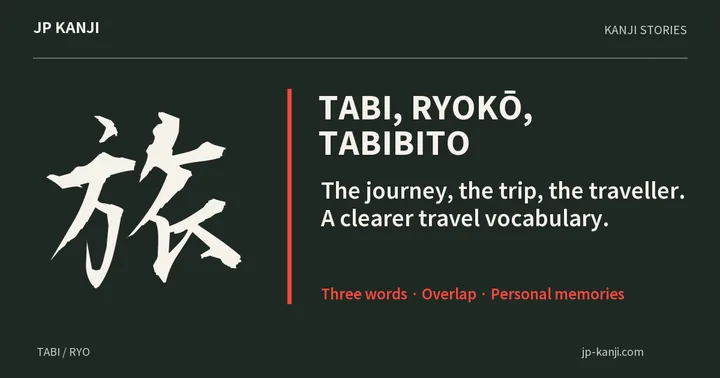
- 旅
- tabiA journey
- 旅行
- ryokōTravel; a trip
- 旅人
- tabibitoA traveller
A meaning to make your own
A thought to give
If buying travel-related clothing for a companion, let them choose the fit and colour they will use. A common motif can be shared while the garments themselves remain individual choices.
Make a gift cardOne more question
Should we divide the suitcase exactly in half?
Only if that suits both people. Footwear, equipment and trip activities may create different needs. Agree on the allocation openly and check the final weight against the actual allowance.
A character to carry with you 旅
旅 can represent a journey shared with someone whose habits differ from yours. Cooperation works through practical agreements, not through becoming identical travellers. Matching character clothing is optional and should never replace those agreements.
Wear this character