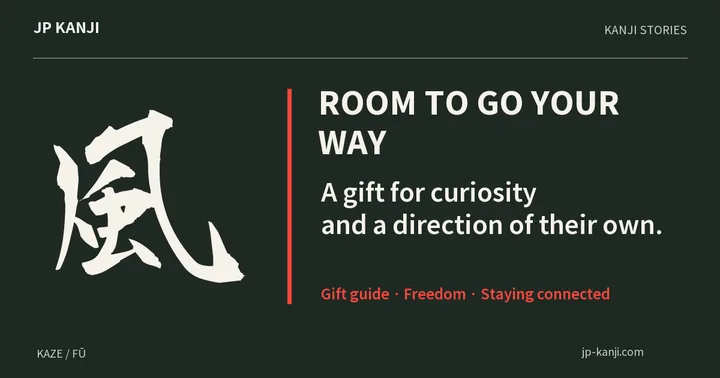
Style & making kaze / fū
Photograph one window at different moments to notice changing light
Keep the framing steady and let the scene provide the variation.
Wear this characterStart with a scene
A one-window photo sequence starts with a view you can revisit without disturbing anyone. Pick a framing that avoids private interiors and identifiable neighbours. Decide whether your subject is the window itself, a reflection or the light falling on an object beside it.
A closer look
Choose a view you can return to
Take three pictures at different moments from approximately the same position. Keep the main object in place if you are comparing light. Note the time and weather for yourself, but do not assume a change in brightness comes only from the sky; the camera may also adjust its exposure.
Put the images side by side before editing. Look for one visible difference: a longer shadow, a reflected branch or a changed edge of light. If you adjust the photographs, preserve the differences you are trying to show rather than forcing every frame into the same mood.
See it in words
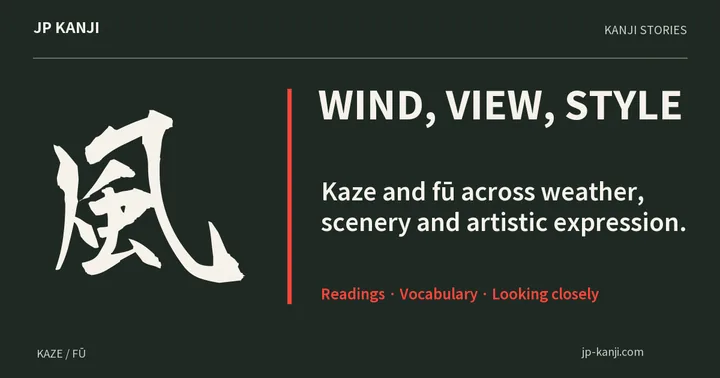
- 風
- kazeWind
- 風景
- fūkeiScenery
- 和風
- wafūJapanese style
A meaning to make your own
A thought to give
A wind motif can accompany a photo gift about a shared place. Ask about the recipient's clothing preferences separately from their enjoyment of the photographs.
Make a gift cardOne more question
Does the sequence need dramatic weather?
No. A modest change in reflection or shadow is enough. The exercise is about comparing carefully, and can be repeated on another day if little changes.
A character to carry with you 風
風 means wind. Moving branches or curtains may bring the character to mind, but the connection comes from this particular observation rather than a claim that every quiet scene represents it.
Wear this character