Style & making kaze / fū
Sort a small wardrobe by the job each piece does in an outfit
Find useful combinations before deciding what is missing.
Wear this characterStart with a scene
Instead of sorting a small wardrobe only by colour, try grouping clothes by their role in an outfit. A plain base, a warm layer and a visual focal point solve different problems. One garment can have more than one role; this is a temporary exercise, not a permanent filing system.
A closer look
Distinguish a foundation from a focal point
Choose three outfits for situations you actually encounter. Lay out every necessary piece, including shoes and the outer layer. Notice whether an apparent gap is a missing garment or simply an unfamiliar combination of things you already have.
Try each outfit and make a short note about movement, temperature and what draws the eye. A statement shirt may need a quieter surrounding layer, while an elaborate jacket may work best with a simpler base. Keep garments you enjoy even when they do not fit the first three examples.
See it in words
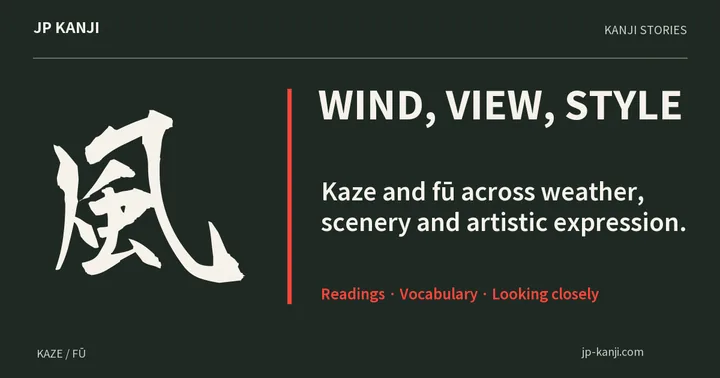
- 風
- kazeWind
- 風景
- fūkeiScenery
- 和風
- wafūJapanese style
A meaning to make your own
A thought to give
Before choosing another graphic shirt, identify which outfit it would join and check the real fit. Enjoying a design does not require replacing the clothes around it.
Make a gift cardOne more question
Should everything combine with everything?
No. A few specific combinations can be enough. Judge the wardrobe by whether it serves your actual days, not by a theoretical number of possible outfits.
A character to carry with you 風
風 means wind. A wind print can be the changing focal point among familiar clothes, giving an existing outfit a different emphasis.
Wear this character