EN · Language
EnglishDeutschFrançaisItalianoEspañol

Style & making kaze / fū

Wear a graphic T-shirt under a blazer without hiding the design

Check the neckline, the opening and the outfit in motion.

Wear this character

Start with a scene

A graphic T-shirt and blazer work together when their shapes leave the design enough space. Put on both pieces and look at the front with the jacket open. Check which parts of the print remain visible instead of judging each garment separately on a hanger.

A closer look

Try the layers together before adding accessories

Compare the T-shirt's neckline with the blazer's lapels. A small change in the collar can alter how crowded the upper chest looks. Move your arms and sit down before deciding; a combination that looks tidy while standing may bunch or pull during an ordinary evening.

Start with simple trousers or a skirt and one pair of shoes you already wear. Take a photograph with the jacket open and another closed. If closing it removes the whole point of the outfit, decide whether you are comfortable treating the print as a detail revealed indoors.

See it in words

風
kazeWind
風景
fūkeiScenery
和風
wafūJapanese style
Examples of usage, not a diagram of the character’s historical development.

A meaning to make your own

A thought to give

When choosing a wind shirt for this purpose, compare its measurements with a tee that fits comfortably beneath your own jacket. Select the garment before planning extra accessories.

Make a gift card

One more question

Should the T-shirt be tucked in?

Try both positions with the real waistband. Choose the one that lets you move and keeps the intended part of the print visible, rather than following a universal rule.

A character to carry with you 風

風 means wind. Its brush movement can bring a lively centre to otherwise restrained layers, especially when the opening leaves the complete character visible.

Wear this character
風

風

Share this story

More about this character 風
All stories →

Style & making

Finding your visual style by noticing what you repeat

Collect examples you genuinely return to, then describe their common details. A personal style can emerge from choices rather than a label.

Read the story

Style & making

Try a new clothing colour with the wardrobe you already have

Test one unfamiliar colour against clothes you actually wear. Keep the experiment small and use product images to compare the exact option.

Read the story

Style & making

Packing for one night away: choose the extra layer you will use

Build a small overnight bag around the day you expect to have, then choose one extra layer by how you will wear and carry it.

Read the story

Style & making

Look at how a garment moves, not only how it hangs

Try an actual garment while sitting, reaching and walking. Separate what a still photograph shows from what you can learn by wearing it.

Read the story
29 more stories

Style & making

What to wear to an outdoor concert: layers for the event and journey home

Plan clothing for the journey, the event and the return, using the forecast and the venue’s actual rules.

Read the story

Style & making

Make a clothing shopping list from the outfits that do not quite work

Identify the missing role before buying another attractive piece with nowhere to go.

Read the story

Style & making

Take a casual outfit from work to an evening out with one planned change

Check both settings, then choose a small change that fits in the bag you already carry.

Read the story

Style & making

Pair a graphic T-shirt with a skirt without losing the print

Use the waistline, shape and movement of the skirt to decide how the outfit sits.

Read the story

Style & making

How to tuck a graphic T-shirt while keeping the design readable

Test the printed area, waist comfort and ordinary movement before settling on a tuck.

Read the story

Style & making

Wear a scarf with a graphic T-shirt without covering the whole design

Choose the scarf’s placement after seeing how it sits over the printed area.

Read the story

Style & making

Choose clothes for a video call by checking the actual camera frame

Test the visible neckline, print and background before the call begins.

Read the story

Style & making

Sort a small wardrobe by the job each piece does in an outfit

Find useful combinations before deciding what is missing.

Read the story

Style & making

Organise a small clothes rail without turning it into a display you cannot use

Choose what needs hanging, leave handling room and keep the everyday route clear.

Read the story

Style & making

Mix two clothing patterns by changing one visual variable at a time

Compare scale, colour and empty space before adding a third patterned piece.

Read the story

Meaning & background

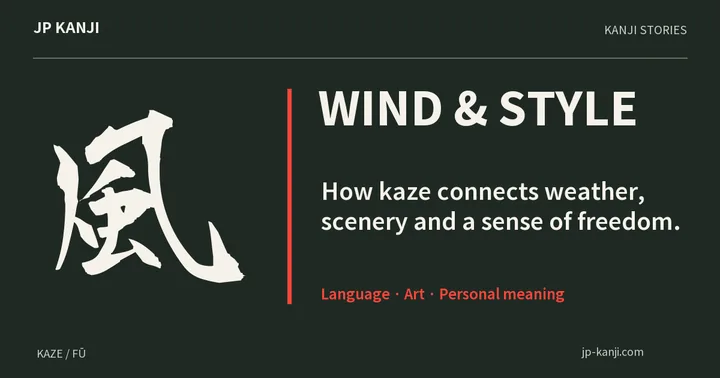
風: the Japanese kanji for wind, scenery and style

Kaze means wind, but 風 also appears in words about scenery and style. Follow those connections and find a quieter way to express freedom.

Read the story

Style & making

Build an outfit colour palette from a landscape photograph

Translate the proportions of a scene, not every colour in it.

Read the story

Style & making

Plan a small outdoor display when loose paper keeps moving

Make the table readable without relying on a perfectly still day.

Read the story

Style & making

Photograph one window at different moments to notice changing light

Keep the framing steady and let the scene provide the variation.

Read the story

Style & making

Choosing clothing colour online: what a screen can and cannot tell you

Use consistent comparisons and the named product variant without expecting a digital image to guarantee physical colour.

Read the story

Style & making

A three-day travel capsule: plan the outfits before packing the bag

Build three days of casual outfits from clothes you already wear. Use a simple outfit grid to spot gaps, avoid duplicate extras and leave room for one favourite graphic.

Read the story

Everyday stories

Draw a score for the sounds of a breeze

Use lines, gaps and repeated marks to record what you hear as air moves nearby. No musical notation or audio equipment is needed.

Read the story

Everyday stories

Three tones, the same conversation: a small dialogue exercise

Keep the speakers and facts fixed, then change rhythm, pauses and sentence length. Hear how a fictional exchange takes on a different manner.

Read the story

Everyday stories

Tell one gust of wind from three different viewpoints

Keep a fictional event unchanged while limiting what each observer can know. Discover how viewpoint chooses the details of a scene.

Read the story

Everyday stories

Make a paper landscape you do not have to glue down

Move a few paper shapes through several compositions. Record the versions you like before making a final decision—or leave the landscape changeable.

Read the story

Style & making

Make a paper mobile from offcuts and watch what the air changes

Turn spare paper into a lightweight hanging arrangement. Adjust the balance, leave space between shapes and notice how the view changes as it turns.

Read the story

Everyday stories

What to do with an hour you did not plan

Keep a cancelled appointment from becoming another task list: choose a small, open-ended way to spend the time.

Read the story

Sayings & idioms

Fūrinkazan: why wind is only part of the picture

風林火山 puts movement beside stillness. Read its four images before turning it into a slogan about speed.

Read the story

Culture & objects

Fūrin: hearing the breeze before you notice it

A small bell makes a moving breath of air audible. Explore the object, its sound and the summer association without confusing them.

Read the story

Style & making

How to suggest wind in a still photograph

Show what the air touches: fabric, leaves or a reflection. Begin with visible evidence before inventing a story around it.

Read the story

Everyday stories

When the picnic becomes an indoor afternoon

A changed plan can preserve the part people were looking forward to. Identify that part before replacing the whole day.

Read the story

Culture & objects

Giving the unseen a figure: thinking about wind gods in art

An invisible force can become a character in a picture. Start with a named artwork, then separate its record from your own response.
Read the story

Words & readings

Kaze and fū: reading the Japanese kanji for wind and style

Follow wind into scenery and artistic style, while keeping each complete word’s meaning clear.

Read the story

Giving & choosing

A meaningful gift for an independent spirit: choosing the wind kanji 風

Choose a message of freedom that celebrates the person without telling them to leave, change or start over.

Read the story

Another character, another perspective

All stories →

Style & making

How to build an outfit around one bold graphic

Start with clothes you already wear. Compare layers, texture and contrast before adding more statement pieces.

Read the story

Style & making

A small colour palette that still feels like you

Try two colours and one accent using clothes or objects you already own. Harmony can include a deliberate difference.

Read the story

Style & making

Make a one-colour outfit interesting by looking at texture

Compare surfaces, shapes and a single graphic when an outfit uses similar colours. Start with the clothes already in your wardrobe.

Read the story