EN · Language
EnglishDeutschFrançaisItalianoEspañol

Everyday stories tabi / ryo

Pack one small craft project for a journey

Choose a portable stage of the work and check the actual travel rules.

Wear this character

Start with a scene

A craft project travels better when you choose one specific stage to complete. Preparing a small drawing, stitching a section or arranging paper pieces asks for different materials. Decide where you expect to work and how much table space and light will realistically be available.

A closer look

Pack the next task, not the whole hobby

List the minimum tools and materials for that stage, then check the current carrier, security and destination rules for anything restricted. Do not assume an item allowed on a previous journey is allowed this time. Choose another stage of the project if an essential tool cannot travel appropriately.

Put small pieces in containers that remain closed inside your bag and keep work in progress separate from finished items. Test packing and unpacking at home. If setup requires emptying the entire bag, simplify the kit before relying on it during a connection or short break.

See it in words

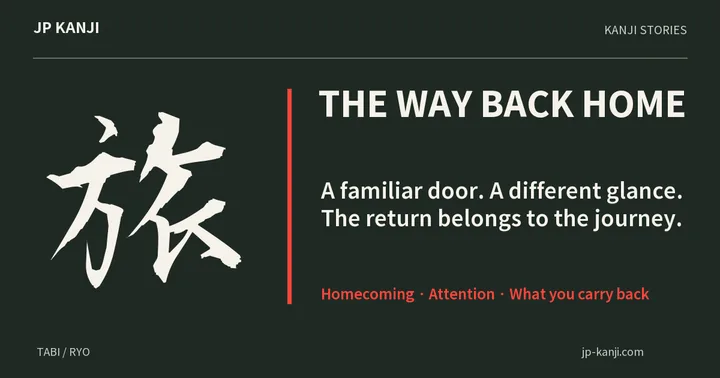
旅
tabiA journey
旅行
ryokōTravel; a trip
旅人
tabibitoA traveller
Examples of usage, not a diagram of the character’s historical development.

A meaning to make your own

A thought to give

For a travelling maker, ask about the project they actually intend to take. A travel motif on a comfortable garment can be more useful than a surprise tool that cannot join the journey.

Make a gift card

One more question

Should I take a backup project?

Only if it solves a real limitation. One compact, usable activity often earns its space more easily than several incomplete kits packed in case every mood occurs.

A character to carry with you 旅

旅 means travel. Carrying a small piece of a familiar hobby can connect movement with continuity, while leaving room to experience the destination itself.

Wear this character


旅

旅

Share this story

More about this character 旅

All stories →

Meaning & background

旅: tabi, travel and the stories you bring home

旅 is the kanji for a journey. Explore how a place can become a memory, and how to turn a travel-inspired design into a personal gift.

Read the story

Everyday stories

Make an offline arrival note before a trip

Keep the next few steps readable when your usual connection is unavailable.

Read the story

Everyday stories

Organise travel receipts before they lose their meaning

Keep a simple record of purchases, shared expenses and items you may need to check later.

Read the story

Giving & choosing

Write a souvenir label that remembers where the object came from

Keep the place, the purchase and your personal memory distinct.

Read the story
29 more stories

Everyday stories

Use a hostel common room without assuming everyone wants company

Read the space and make a small invitation that is easy to decline.

Read the story

Giving & choosing

Plan souvenir spending before the last shop at the station

Choose who you are buying for, what is worth carrying and how much space you want to give to gifts.

Read the story

Everyday stories

Plan a day trip by train around the return journey

Choose a reachable destination, a manageable activity and a return plan checked with the actual operator.

Read the story

Style & making

Make a travel photo book people will want to turn through

Choose a small story, remove repeated views and give each page a clear role.

Read the story

Everyday stories

Plan a rainy city day without crossing town between every indoor stop

Build a compact alternative around one area and check the practical details before leaving.

Read the story

Style & making

Send a postcard from home as if someone were visiting your ordinary day

Choose one local detail and write a small scene instead of waiting for a holiday worth announcing.

Read the story

Everyday stories

Pack for a trip with two hotels without unpacking everything twice

Separate the first stay’s needs from items that can remain packed until later.

Read the story

Everyday stories

A hotel-room departure check that follows the way you used the room

Check likely storage places once in a clear order before returning the key.

Read the story

Everyday stories

Plan laundry on a longer trip before reducing your clothing list

Check access, drying time and garment care before counting on a mid-trip wash.

Read the story

Everyday stories

Share a suitcase without losing track of whose essentials are where

Agree on space, access and responsibility before putting two people’s belongings in one bag.

Read the story

Everyday stories

Return to a favourite destination without trying to repeat the same trip

Keep one familiar anchor and leave space to notice what has changed.

Read the story

Giving & choosing

How to give a trip as a gift when the dates are not decided

Make the surprise an invitation to plan, with a clear offer and room to choose. Here is what to put in the card before any travel is booked.

Read the story

Everyday stories

What to pack for a day trip: plan the outing, then test your bag

Walk through one outing from departure to return, then test your bag. Specific scenes can be more useful than an ever-growing generic packing list.

Read the story

Everyday stories

How to choose a train or coach seat: views, access and travelling together

A window view, easier access or sitting together may lead to different choices. Rank your preference before reading the actual train or coach seat options.

Read the story

Everyday stories

Make a small phrase card for the conversations your trip may need

Choose a few practical questions, check their intended meaning with a fluent reader and prepare a way to ask for a written answer. Keep the card easy to find.

Read the story

Everyday stories

Share a trip without making your friends watch every photograph

Choose three scenes, keep the first telling short and invite another person’s story. A travel evening can become a conversation instead of a slideshow marathon.

Read the story

Everyday stories

Read a departure board one detail at a time

Match your booking to the service information in front of you, then resolve the uncertain detail. A familiar-looking destination alone may not identify your departure.

Read the story

Style & making

Choose souvenir clothing you will still wear after the trip

Look beyond the holiday moment when choosing a souvenir T-shirt or layer. Connect the memory to a garment that fits life at home.

Read the story

Everyday stories

Sketch a place with a few lines instead of chasing a perfect view

Choose one shape, one overlap and one detail for a travel sketch. Leave enough context to remember where you stopped and what caught your attention.

Read the story

Everyday stories

Make a travel playlist that remembers the journey in order

Turn a few songs into a personal route through a trip. Keep the connection specific with a place, a moment and one line of your own.

Read the story

Everyday stories

Travelling with a friend when your ideal days are different

Agree on pace, spending and time apart before a trip, so shared memories do not require an identical itinerary.

Read the story

Sayings & idioms

Tabi wa michizure: a Japanese proverb about travel companions and kindness

An improvised lunch can stay with you longer than a missed train. A story of companionship leads to 旅は道連れ世は情け.

Read the story

Everyday stories

The small souvenir that remembers a whole afternoon

A ticket, postcard or sketch can carry a precise moment. Keep the memory attached before the object becomes anonymous.

Read the story

Everyday stories

Spending time on one street instead of collecting more stops

Choose a small area and a few questions. A modest outing can give you something specific to remember without a crowded itinerary.

Read the story

Style & making

A travel journal you can write in five lines

Record one place, one detail, one exchange, one surprise and one question. Keep it small enough to finish while the day is still clear.

Read the story

Everyday stories

The return journey: noticing home after being away

A familiar room can look slightly different when you return. Record the difference before ordinary routines cover it again.

Read the story

Everyday stories

Giving a travel memory to someone who was not there

A souvenir becomes easier to receive when its story connects with the recipient, not only with the traveller.

Read the story

Words & readings

Tabi, ryokō and tabibito: three Japanese travel words

A journey, travelling and a traveller: learn the differences without turning them into a rigid “tourist versus explorer” rule.

Read the story

Giving & choosing

A thoughtful gift for a travel companion: a memory, a note and 旅

Choose a detail from a shared journey instead of a generic list of destinations or a promise of the next trip.

Read the story

Another character, another perspective

All stories →

Everyday stories

A creative hobby does not have to become a side hustle

Decide what you want from a creative pastime before turning it into orders, posts or a second job. Leave room for making things just because you enjoy it.

Read the story

Everyday stories

Enjoy a small collection without needing the complete set

Give a collection a personal focus and a physical limit. Keep the details that matter, and leave room to pass on the next tempting object.

Read the story

Everyday stories

Build a personal reading path around a question you care about

Choose your next book by a useful question, leave a short note and follow the connection that interests you. A reading path need not become a completion list.

Read the story