Giving & choosing tabi / ryo
Write a souvenir label that remembers where the object came from
Keep the place, the purchase and your personal memory distinct.
Wear this characterStart with a scene
A souvenir label can preserve the story of an ordinary object long after its receipt disappears. Write the place and date of purchase, then identify the maker or shop only when you actually know it. Buying something in a town does not prove it was made there.
A closer look
Record the details while they are still clear
Add one sentence about why you chose it: the colour of a market stall, a conversation or the walk that brought you to the shop. Keep that personal memory separate from factual claims about materials, age or tradition. An appealing story does not need an invented origin.
If the object is a gift, include any useful care information provided with it and keep the original label where possible. Do not copy an uncertain translation as a definite instruction. Ask the seller or leave the point open when the information is unclear.
See it in words
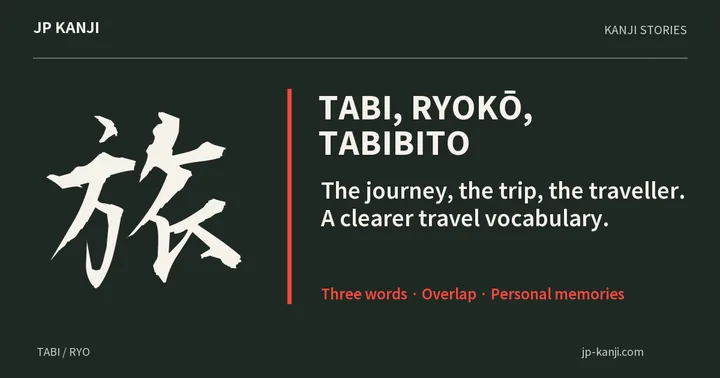
- 旅
- tabiA journey
- 旅行
- ryokōTravel; a trip
- 旅人
- tabibitoA traveller
A meaning to make your own
A thought to give
For a travel-themed garment, distinguish the character's meaning from where the product is made or sold. Check the actual product details rather than inferring provenance from the motif.
Make a gift cardOne more question
What if I have forgotten the shop name?
Record only what you remember with confidence. An approximate place or an honest unknown is better than assigning a shop or maker because it seems plausible.
A character to carry with you 旅
旅 means travel. A souvenir can represent a particular encounter rather than stand for an entire country, and the character can express that wider interest in journeys.
Wear this character